About
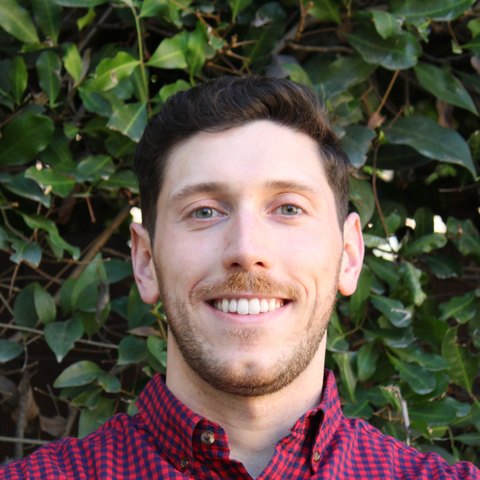
I am a Postdoctoral Researcher at the NASA Exoplanet Science Institute (NExScI) at Caltech/IPAC. Prior to my current appointment, I was previously an NSF Astronomy & Astrophysics Postdoctoral Fellow in the Caltech Department of Astronomy. I study how planetary systems form and evolve by connecting individual exoplanet discoveries to population-level demographics, using ground-based telescopes and large datasets from space missions like TESS. My current work tackles a fundamental question: do giant planets and brown dwarfs form the same way? I am answering it by measuring their orbits, atmospheres, and host stars to pinpoint where planet-like formation gives way to star-like formation.
I earned my PhD in Astrophysics from UC Berkeley in 2023, working with Courtney Dressing to discover planets with TESS and to learn how stellar mass and metallicity shape planetary populations. My thesis focused on hot, terrestrial planets that make favorable JWST targets and on the demographics of planets orbiting hot stars. Along the way, I developed an expertise in observational astronomy, collecting data across more than 100 nights with telescopes all around the world.
I got my start in research as an undergraduate at the University of Chicago, where I worked with Arieh Königl on simulations of planetary migration and of dust transport in protoplanetary disks by magnetocentrifugal winds. I earned a B.A. in Physics with a specialization in Astrophysics there in 2017.
Research
- 01Stellar obliquities OATMEAL survey The tilt between a star's spin and its companion's orbit records how the system dynamically evolved. I co-founded the OATMEAL survey to measure these tilts for giant planets and brown dwarfs.
- 02Population-level planet statistics Demographics Using large surveys like TESS and the California Legacy Survey, I measure how populations of planets and brown dwarfs change with host-star properties such as temperature and metallicity.
- 03Exoplanet discovery with TESS Software · TRICERATOPS TRICERATOPS, a Bayesian tool I built to separate real planets from false positives using TESS data alone, is now credited with more than 200 planet discoveries.
- 04Planet formation and evolution Theory Simulations of high-eccentricity tidal migration and of dust carried outward by protoplanetary disk winds, tested against the observed populations of planets and disks.
Publications
More than 140 peer-reviewed publications in total; the full list is on SciX. My first-author papers are below.
2026
-
The Astronomical Journal, 171, 75 (2026)
2025
-
Publications of the Astronomical Society of the Pacific, 137, 074401 (2025)
-
Small and Close-in Planets are Uncommon Around A-type Stars
The Astronomical Journal, 169, 45 (2025)
2024
-
The OATMEAL Survey. I. Low Stellar Obliquity in the Transiting Brown Dwarf System GPX-1
The Astronomical Journal, 168, 189 (2024)
2022
-
HD 56414 b: A Warm Neptune Transiting an A-type Star
The Astrophysical Journal Letters, 935, L10 (2022)
-
Validation of 13 Hot and Potentially Terrestrial TESS Planets
The Astronomical Journal, 163, 99 (2022)
2021
-
The Astronomical Journal, 161, 24 (2021)
2019
-
Dust Transport and Processing in Centrifugally Driven Protoplanetary Disk Winds
The Astrophysical Journal, 882, 33 (2019)
2017
-
A Test of the High-eccentricity Migration Scenario for Close-in Planets
The Astronomical Journal, 154, 192 (2017)
Contact
NASA Exoplanet Science Institute
California Institute of Technology
1200 East California Blvd
Pasadena, CA 91125